

Seventy years have passed, but the memories of one of the darkest days in Springhill’s history remain deeply rooted in a community built on coal mining, hard work, sacrifice and resilience.
On Nov. 1, 2026, Springhill will mark the 70th anniversary of the 1956 mine explosion, a tragedy that claimed 39 lives, devastated families and left an enduring mark on the community and its people.
An Act of Remembrance will take place beginning at 2 p.m. at Springhill Baptist Church. The ceremony will include music and the reading of the names of the miners lost in what was the second of three major mining disasters in Springhill – with the 1891 explosion and the 1958 bump being the other two.
“Seventy years may have passed since that tragic day, but for the people of Springhill, the memories and the sacrifices made on Nov. 1, 1956, will never fade,” said Municipality of Cumberland Mayor Rod Gilroy.
“Thirty-nine men lost their lives that day and in the rescue efforts that followed, leaving behind families, friends and a community forever changed. We remember those men, the incredible courage of the mine rescuers who risked everything to save their fellow miners, and the strength of the families who carried on in the face of unimaginable loss.
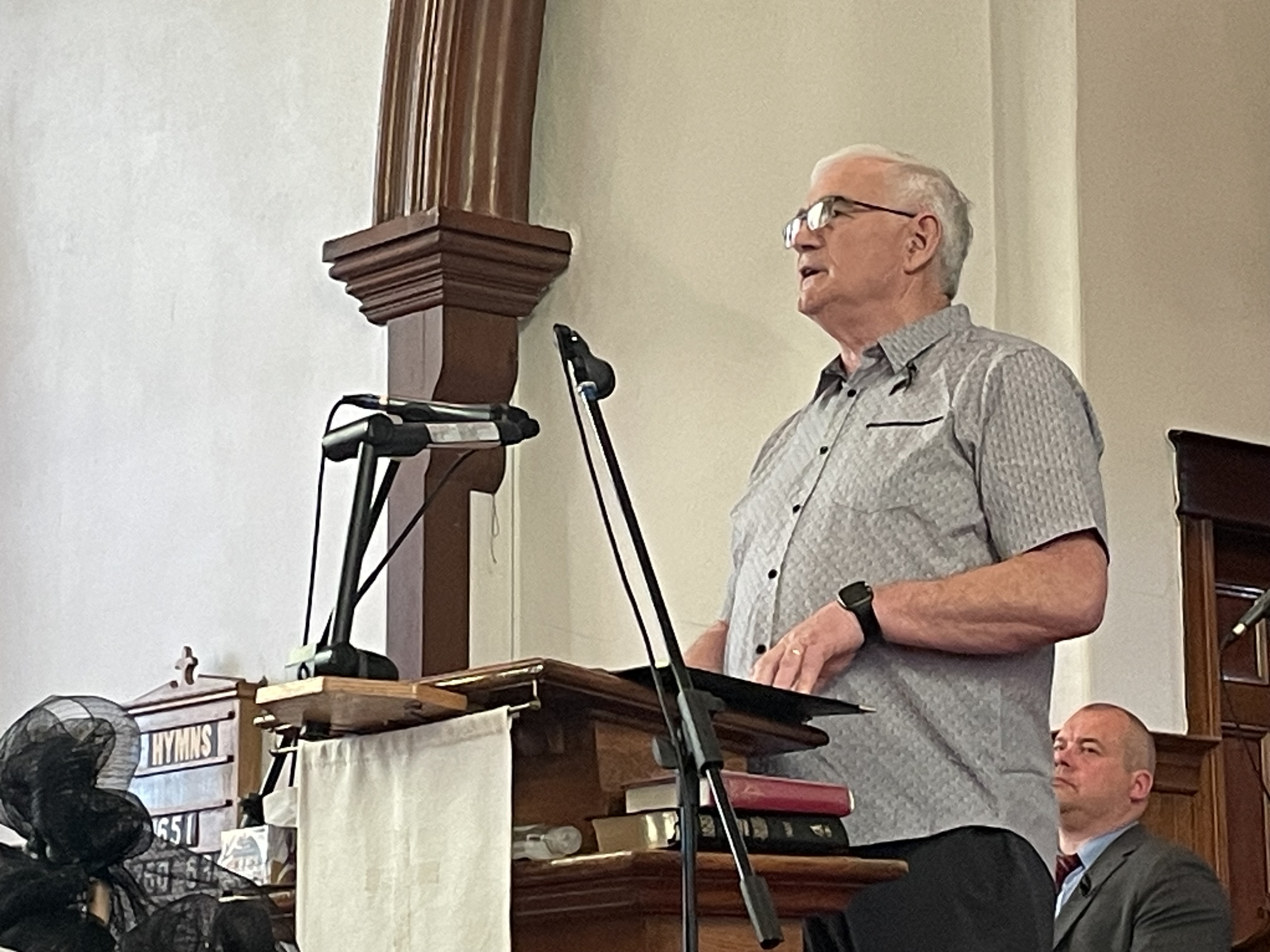
Clyde Jones speaks during Miner’s Memorial Day on June 11. His father was killed in the 1956 explosion. His father, Bill, was working on the surface that afternoon after trading shifts with a friend. He was working on the tipple, where loaded coal cars were dumped after reaching the surface. He was blown clear by the blast but badly burned and died six days later.
“Springhill has always been a community of hardworking, caring and resilient people. As we mark this solemn anniversary, we honour those who never came home and reaffirm our commitment to ensuring their stories, their sacrifices and the proud mining heritage of Springhill are never forgotten.”
It was shortly after 5 p.m. on Thursday, Nov. 1, 1956, when disaster struck the No. 4 coal mine of the Cumberland Railway and Coal Company.
A group of coal cars broke loose and travelled back down the mine, striking an electrical cable. The resulting electrical arc ignited coal dust suspended in the air, triggering a massive explosion that tore through the underground workings and reached the surface.
The force of the blast caused extensive destruction, leaving miners trapped deep underground and sending shock waves of fear and uncertainty throughout the community.
Of the 118 men working underground at the time, 30 lost their lives. Seven workers on the surface also died, while two mine rescuers lost their lives during the rescue operation, bringing the final death toll to 39.
In the hours and days that followed, Springhill became the scene of an extraordinary rescue effort.
Mine rescue teams, known as draegermen, along with other miners and volunteers, worked tirelessly in dangerous conditions, facing smoke, poisonous gases, damaged tunnels and the constant threat of further disaster.
Their determination and courage helped bring 88 miners safely to the surface over the following days.
For families waiting anxiously for news of their loved ones, those days were filled with a mixture of hope, fear, heartbreak and, for some, tremendous relief.
While the rescue of so many men offered moments of celebration, there was also overwhelming grief for the families whose husbands, fathers, sons, brothers and friends would never return home.
The explosion attracted international attention, placing the small Cumberland County coal mining community in headlines around the world.
But for the people of Springhill, the tragedy was much more than a news story. It was personal. Almost everyone knew someone who had been killed, injured or affected by the disaster.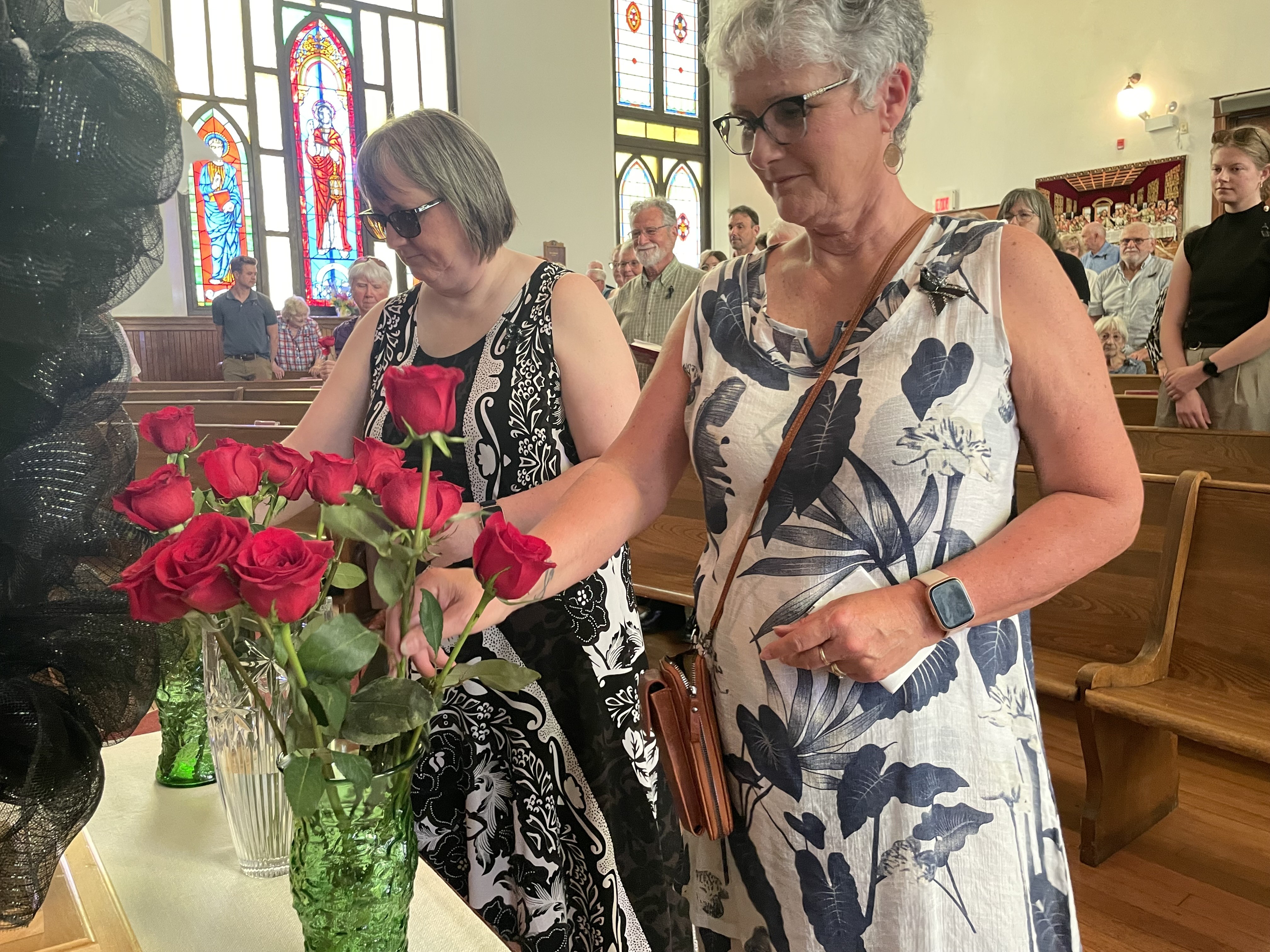
Descendants of those lost in the 1956 explosion places roses in their memory during Miners’ Memorial Day services on June 11.