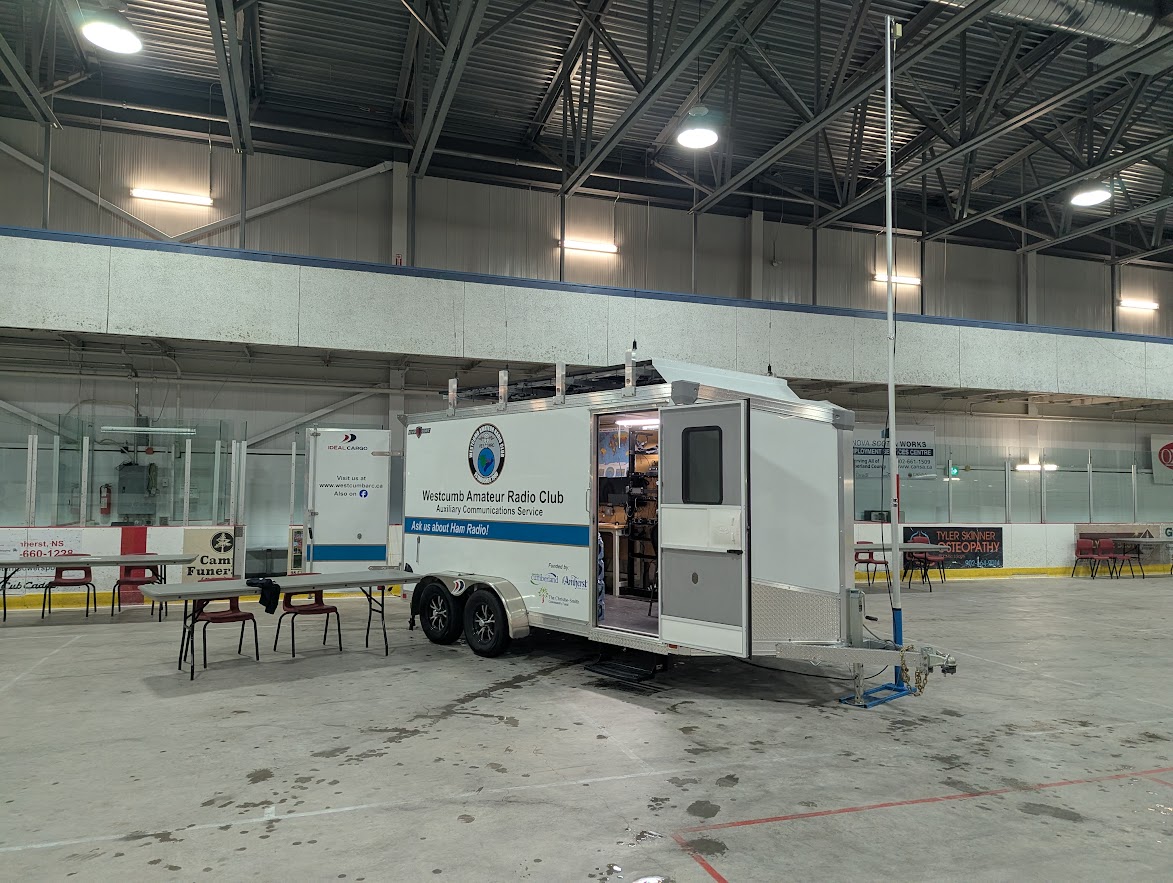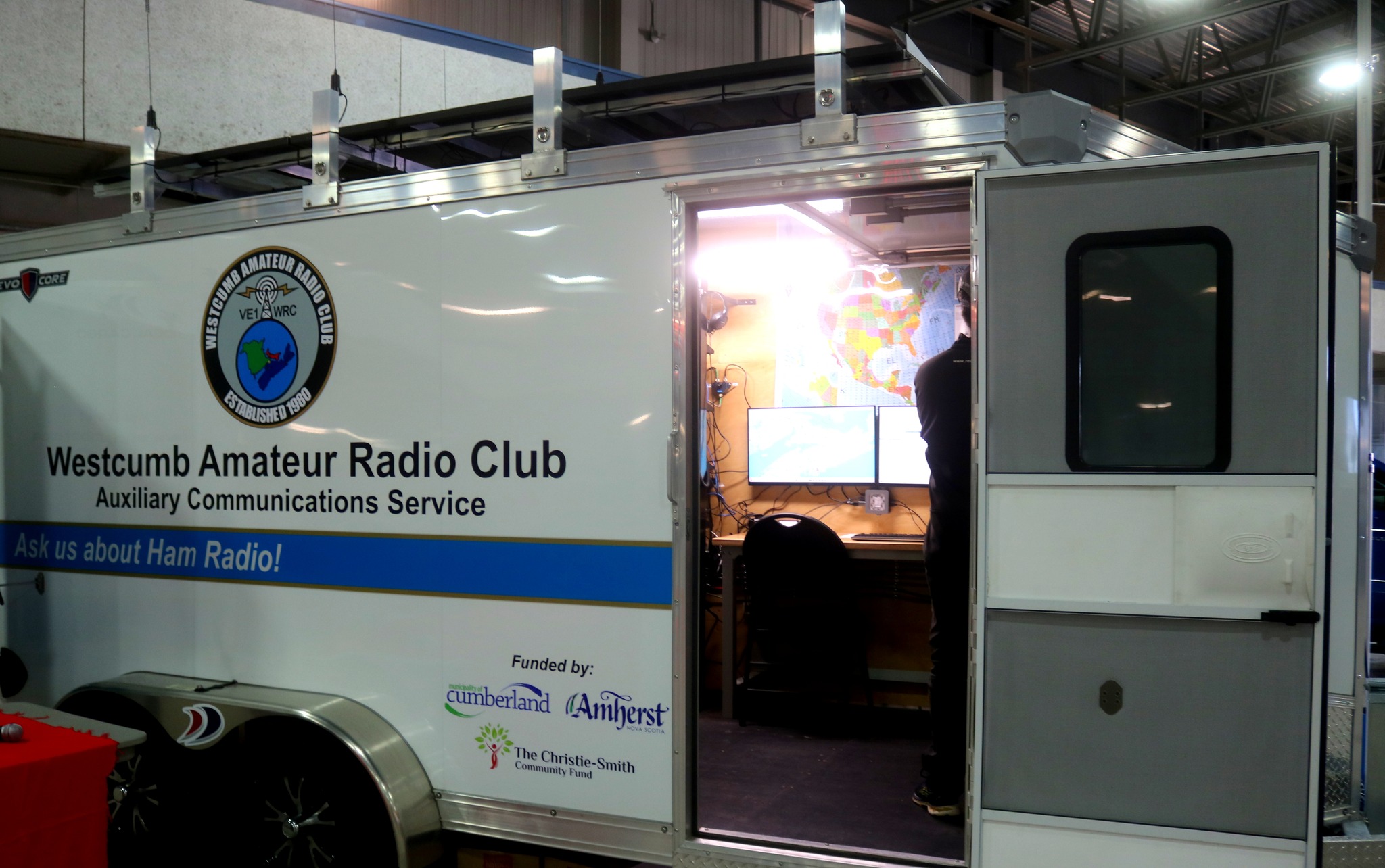
The WestCumb Amateur Radio Club recently unveiled an auxiliary communications trailer that’s the only one of its kind in the Maritimes and was developed with financial support from the Municipality of Cumberland, the Town of Amherst and the Christie-Smith Community Fund.
“Across the country various radio clubs have had these for many years, but this is the first one in the Maritimes,” Steve Orr said. “Moncton and Halifax have something similar, but it’s more for equipment and you can’t go inside it. There’s no other trailer like this that other amateur radio clubs in the Maritimes have.”
Hurricane Dorian in late 2022, the wildfires in HRM and Barrington in 2023 and in the Annapolis Valley last summer are examples of the extreme weather and natural conditions being faced by first responders and emergency management officials in Nova Scotia.
Orr said residents expect communications to be there no matter the conditions, but with the increased frequency of severe weather, things like phone, internet and other communications tools may not be available.
That’s what makes units such as this so important.
“We always like to think that the internet will always be there and that cellular phones will always be there, but the reality is that we know from previous experiences they can be affected,” he said. “As much as the province has a terrific TMR system, weather and the environment can still get you. The concept is if all those services go down, amateur radio operators can bring their unique set of skills to continue communications in a disaster.”
Orr said sections of Cumberland County could be considered remote and its unique geography make this command unit vital. The trailer can be taken anywhere in the county, set up and immediately begin communicating – even if landlines, cell phones and digital services (like the internet) are knocked out.
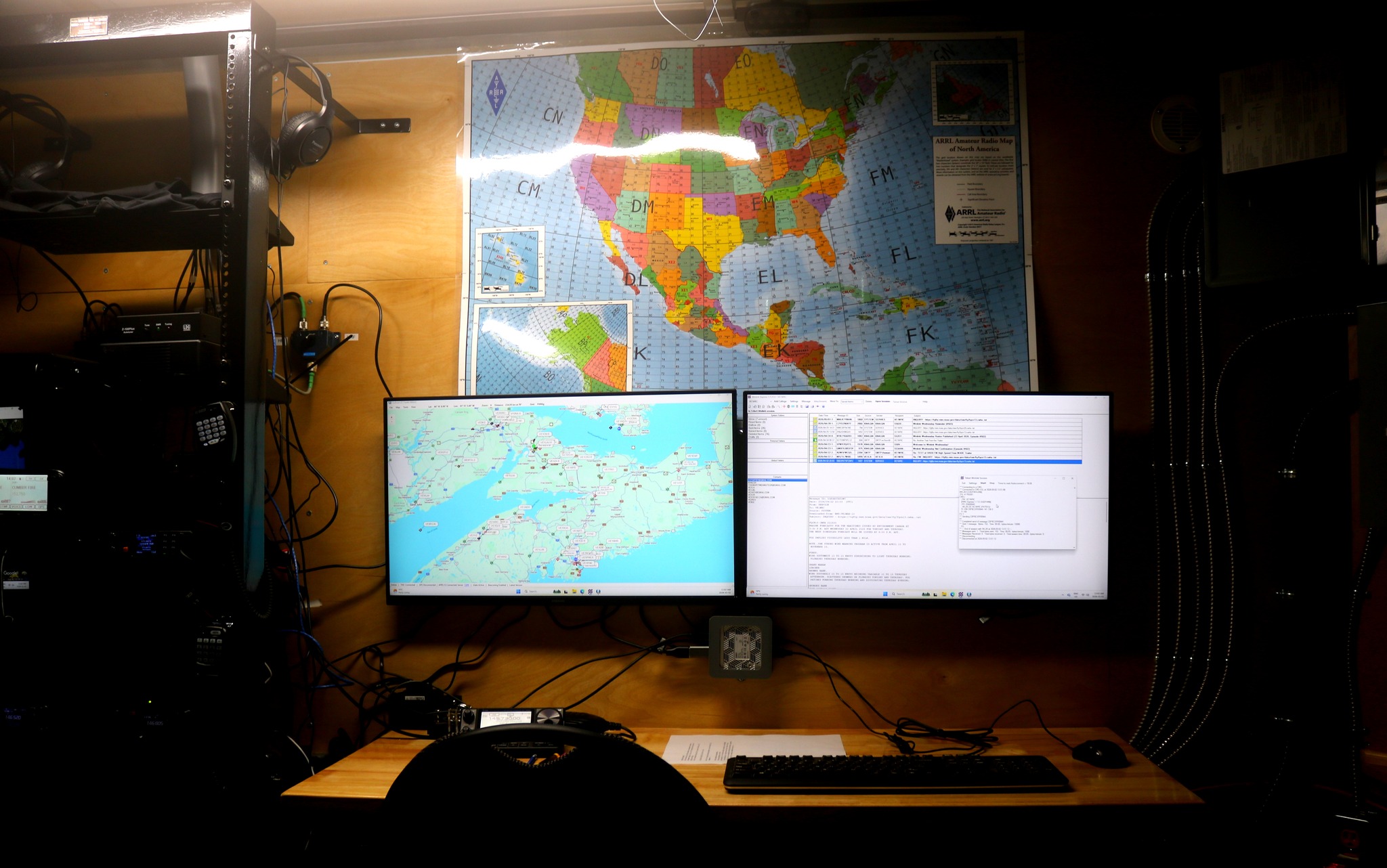
It’s equipped with solar panels for power and has numerous antennae in support of various communications tools, most notably high frequency radio – something that may seem aged compared to modern technology but remains infallible during a crisis.
“When it comes to EMO and the province’s deployment of resources, the closest office we have is in Truro. The issue is Truro is on the other side of the Cobequid Pass, which can be a huge geographic roadblock in certain weather,” Orr said. “We approached the county and enlisted the town’s support as well as the Smith-Christie foundation. Between the three of them it’s fully funded.”
The trailer was first proposed by longtime WestCumb ARC member Jim Langille and in early 2025 Orr and Mike Johnson made presentations to both municipal councils and last June both councils provided $15,000 in grants funding with the charitable Smith Christie fund rounding out the required funds.
“Investing in this mobile command unit is about making sure the Municipality of Cumberland is prepared when our communities need it most,” Mayor Rod Gilroy said. “Whether it’s severe weather, wildfires or another emergency situation, reliable communication can save lives. The WestCumb Amateur Radio Club has created an incredible resource that strengthens emergency preparedness across our region and we’re proud to support a project that will benefit residents for years to come.”
The new trailer was ordered from Quebec and picked up in Moncton last fall. Members of the amateur radio club went to work putting all the pieces together to bring the modern communications-command post together in a relatively short period of time.
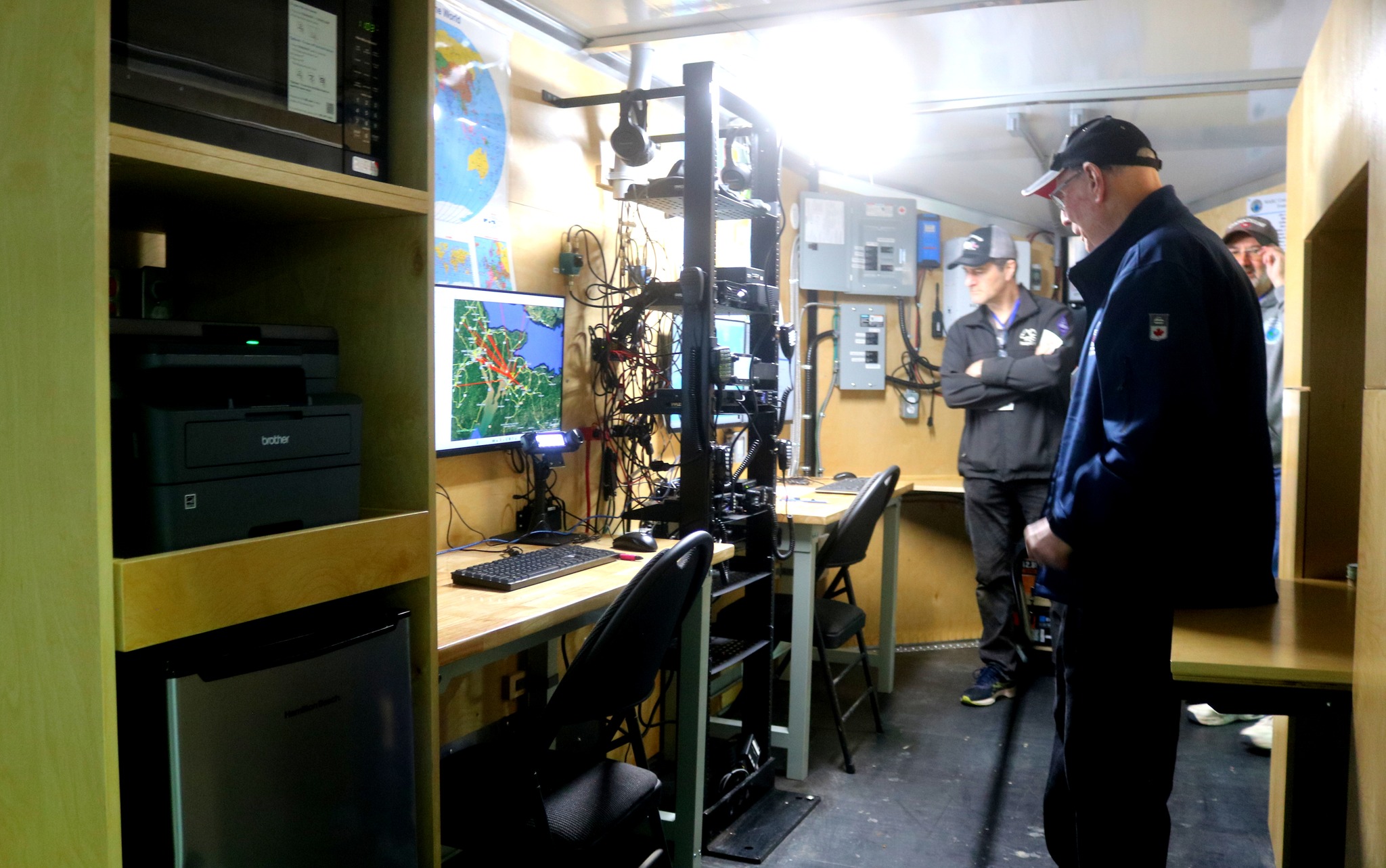
“We have a number of people in our organization with particular skill sets that went to work assembling this unit,” Orr said. “We have people who are very good at cabinetry, some who are very good at welding who did some of the mounts for us. Many people made this a reality.”
Now that it’s operational, Ott said the club intends to take it out and about to community events as a communications centre and as a go-to command centre for events around the region.
“This trailer is a welcome addition to the tools Cumberland EMO has to fill gaps that arise during times of conventional communication loss,” auxiliary regional EMO coordinator Mike Johnson said. “ We have had several examples of communication loss from Hurricane Fiona, Dorion and the two internet cable cuts which caused huge disruption to emergency services.
“It is a reality that communication loss will happen when systems are overloaded or impacted by hardware failures due to extreme weather events or accidental damage. During these events,
Cumberland Regional EMO has developed plans to exercise a variety of backup plans to ensure residents can get the help they need from emergency services.”
Johnson said the auxiliary communication service trailer can support multiple operators and multiple communication systems simultaneously to reach across a community, the county or the province. In fact, with the included High Frequency radios, they can reach around the world if need be.